

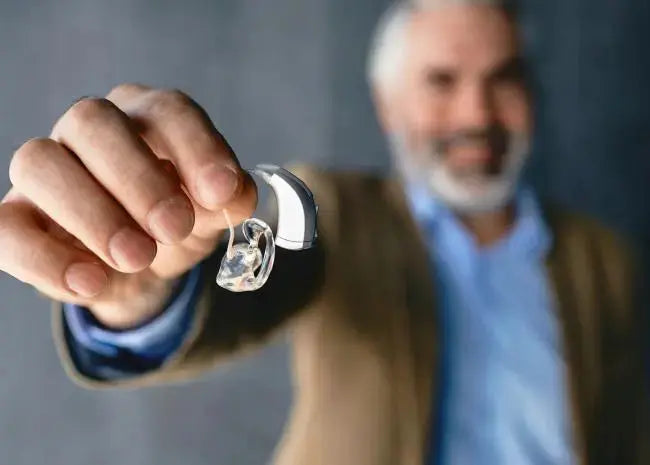
"I can't stand my hearing aids anymore." If that resonates with you, you're far from alone. Pain, irritation, feedback whistling, a plugged-ear sensation, metallic voices: the reasons hearing aids become unbearable are numerous — and often underestimated. This guide explores the real causes of discomfort, solutions to address them, and alternatives when traditional hearing aids are simply no longer an option.
Why hearing aids can become unbearable
Hearing aid discomfort isn't a whim — it's a real problem affecting a significant proportion of users. Studies suggest that 20 to 30% of fitted users end up abandoning their devices within the first few years. The causes are varied:
Physical pain and irritation
The in-ear mould exerts constant pressure on the ear canal. After a few hours, this pressure can cause pain, redness, or even sores in people with sensitive skin. Poorly fitted moulds are the leading cause: the ear canal changes shape with age, weight, and jaw movement — a perfect mould in January can become painful by June.
Plugged-ear sensation (occlusion effect)
The mould blocks the ear canal, creating an unpleasant feeling of pressure and resonance. The wearer's own voice sounds amplified and hollow (autophony). Some describe it as "talking inside a fish tank." It's one of the most common complaints, especially in the early weeks.
Whistling (feedback)
Feedback occurs when amplified sound "leaks" from the mould and re-enters the hearing aid's microphone, creating a high-pitched whistle. It often happens during hugs, while chewing, or when the mould shifts slightly. Modern devices include anti-feedback systems, but they're not foolproof.
Artificial sound and listening fatigue
Hearing aids amplify all sounds — including those you don't want to hear. Air conditioning hum, clattering dishes, rustling paper: everything is amplified uniformly. The brain must then sort through this flood of sound, generating intense cognitive fatigue by the end of the day.
Handling difficulties
Changing batteries (sometimes weekly), cleaning moulds, inserting the device into the ear canal: these tasks require fine motor skills that many older adults no longer have. Arthritis, tremors (Parkinson's), or simply declining eyesight make daily handling exhausting.
Earwax buildup
Wearing an in-ear mould stimulates wax production and prevents natural drainage. The result: earwax blockages are more common among hearing aid wearers, reducing device effectiveness and worsening discomfort.
How to improve your hearing aid comfort
Before giving up on your hearing aids, several avenues are worth exploring with your audiologist:
Get new ear moulds
A refreshed custom mould can resolve 80% of pain and feedback problems. The ear canal evolves over time — request a new impression if your moulds are over 2 years old. Soft silicone moulds are generally better tolerated than hard acrylic ones.
Request a settings adjustment
A poorly tuned hearing aid over-amplifies certain frequencies, creating metallic sounds or feedback. Your audiologist can refine the amplification profile and activate noise reduction programmes. Don't hesitate to return several times — the perfect setting often takes 3 to 5 sessions.
Try a different device type
If in-the-ear devices are unbearable, a behind-the-ear model with thin tube (RIC/RITE) may be more comfortable. "Open-fit" devices reduce the occlusion effect by leaving the canal partially open. For a full overview of hearing loss levels and matching solutions, see our guide.
Respect the adjustment period
The brain needs 4 to 12 weeks to readjust to sounds after a period of untreated presbycusis. During this phase, sounds seem too loud, too sharp, too "different." A gradual build-up (2 hours on day one, adding 30 minutes daily) eases the transition.
When hearing aids are no longer an option: the alternatives
For some people, despite every adjustment, hearing aids remain unbearable. For others, circumstances have changed: reduced autonomy, cognitive decline, devices lost in care homes. In all these cases, alternatives to traditional hearing aids exist:
Listening assistants
Non-medical devices that amplify and clarify the speaker's voice without requiring a prescription or audiologist settings. Designed for occasional use (conversations, consultations, meals) rather than permanent wear. Learn more on our listening assistant page.
Bone conduction headphones
Bone conduction headphones transmit sound through skull bone vibrations — no ear insertion, no canal pressure. For people who can't stand ear moulds, it's instant relief. They work even with earwax blockages.
Environmental adaptation
When neither hearing aids nor assistants are feasible, the environment can be adapted: reduce background noise, speak face to face, use visual cues. For practical communication tips, see our guide: "I hear well but understand poorly".
Spokeo: the alternative when hearing aids no longer work
Winner of the Grand Prix at the Concours Lépine International 2025
Spokeo was designed for situations where traditional hearing aids fail or are abandoned. Its design eliminates the main sources of discomfort: no in-ear mould (the headset sits on the head), no feedback (the mic is separate from the headset), and patented dual conduction (air + bone) works even when the ear canal is blocked.
Why Spokeo solves traditional hearing aid problems
Spokeo is particularly suited if:
- Your hearing aids cause pain or irritation
- You've abandoned your devices and don't wish to reinvest (€1,500-3,000)
- Your loved one in a care home regularly loses their hearing aids or can't manage them
- Feedback or the plugged-ear sensation made you give up on hearing aids
- You need occasional help (meals, visits, consultations) rather than full-time wear
- Your ear canal is frequently blocked by earwax
→ Discover the Spokeo kit (€598 incl. tax, no prescription): myspokeo.com
When a loved one refuses their hearing aids: what to do
Hearing aid refusal is a sensitive issue for families. A few practical approaches:
- Don't force the issue: pushing harder increases rejection. Respect the person's experience — their discomfort is real.
- Understand the reason: is it pain? Feedback? Complexity? Each cause has its solution.
- Suggest gentle alternatives: a listening assistant like Spokeo, used only during meals or visits, is often better accepted than a device worn all day.
- Involve those around them: with Spokeo, the speaker wears the mic. The person with hearing loss has nothing to manage — just wear the headset.
Read more: My parent refuses hearing aids: understanding and taking action.
Frequently asked questions about hearing aid discomfort
My hearing aids are unbearable — what should I do?
Start by seeing your audiologist for a readjustment: new ear mould impression, frequency tuning, anti-feedback programme activation. If the device remains unbearable despite adjustments, alternatives exist: open-fit moulds, thin-tube behind-the-ear models, or listening assistants like Spokeo that use no in-ear mould at all.
Why do my hearing aids hurt my ears?
Pain is usually caused by poorly fitted moulds (too large, too rigid, or worn out). The ear canal changes shape over time — a mould that was perfect 2 years ago may no longer fit. Ask your audiologist for a new impression. Soft silicone moulds are often better tolerated than hard acrylic ones.
How long does it take to get used to hearing aids?
The adjustment period typically lasts 4 to 12 weeks. The brain must readjust to processing sounds it hasn't heard for months or years. Gradual build-up is recommended: start with 2 hours on day one, adding 30 minutes daily. Voices may sound "metallic" at first — this is normal and fades with time.
Are there hearing aids that don't go inside the ear?
Bone-anchored hearing aids (BAHA implants) bypass the ear canal but require surgery. For a non-surgical, no-mould solution, bone conduction headphones like Spokeo transmit sound through skull bone vibrations — no ear insertion, no pressure, compatible even with a wax-blocked canal.
Can Spokeo be used instead of hearing aids?
Spokeo is not a medical hearing aid — it's a listening assistant for communication situations (conversations, meals, consultations, TV). It doesn't replace a hearing aid for permanent wear. However, it offers a practical alternative for people who have abandoned their devices or can no longer wear them: no mould, no feedback, no complex settings, and priced at €598 incl. tax without a prescription.
My parent in a care home keeps losing their hearing aids — what can I do?
Hearing aid loss in care homes is extremely common — and replacement is only covered every 4 years. Spokeo offers a practical solution: the headset is more visible and harder to lose than a small in-ear device, requires no settings (2 pre-set volume levels), and the nursing staff manages the Smart Mic.
Conclusion
Hearing aid discomfort is not inevitable — but neither is it a reason to give up on better hearing. If your device is bothering you, start with your audiologist: a simple readjustment often solves the problem. If despite everything the device remains unbearable, alternatives like Spokeo restore communication comfort without the constraints of an in-ear mould.
With its patented dual conduction, directional Smart Mic and simplicity of use — winner of the Concours Lépine 2025 —, Spokeo offers a solution for people excluded from the traditional hearing aid pathway. Because giving up on hearing means giving up on connection.