

Does the sound of someone chewing make you furious? Does pen-clicking trigger an urge to leave the room? If certain everyday sounds provoke disproportionate emotional reactions — anger, anxiety, disgust — you may be experiencing misophonia. This neurological condition, long overlooked, now has concrete therapeutic options. This guide covers the validated treatments, complementary approaches, and technological tools that can genuinely help.
Misophonia in brief: what to know before discussing treatment
Misophonia — literally "hatred of sound" — is a neurological condition in which specific sounds trigger intense, involuntary emotional reactions. It's not a hearing problem: the ear works normally. The issue lies in how the brain interprets and reacts to certain sound stimuli.
The most common trigger sounds include mouth noises (chewing, swallowing, breathing), repetitive noises (pen clicking, tapping) and sometimes associated visual triggers (seeing someone chew). The reaction isn't simple annoyance — it's a fight-or-flight response, as though the nervous system were facing a threat.
To better understand the mechanisms and differences from other conditions like hyperacusis, see our dedicated article: Misophonia: understanding this little-known condition.
Key fact: misophonia is not yet classified in the DSM-5 (the standard diagnostic manual in psychiatry), which complicates its official recognition. However, research is advancing rapidly: neuroimaging studies have shown hyperactivity of the insula — a brain region involved in emotions — in people with misophonia. We now know that this condition has a neurological basis, not a psychological one.
Cognitive behavioural therapy (CBT): the gold standard treatment
CBT is currently the most recommended and best-documented approach for misophonia. It doesn't "cure" the condition, but can significantly reduce the intensity of emotional reactions to trigger sounds.
How CBT works for misophonia
The approach works in three stages. First, identify the automatic thoughts triggered by the sound ("this noise is unbearable", "they're doing it on purpose"). Then, restructure these thoughts into less emotionally charged interpretations ("this sound is unpleasant, but it's not dangerous"). Finally, modify avoidance behaviours that reinforce the condition (skipping family meals, wearing earplugs constantly).
Gradual exposure and desensitisation
A key component of CBT for misophonia is gradual exposure to trigger sounds in a safe therapeutic setting. The therapist progressively increases exposure intensity or duration while teaching emotional regulation techniques. The goal isn't to eliminate the reaction, but to make it tolerable.
Results and treatment duration
A CBT programme for misophonia typically lasts 8 to 20 sessions (weekly or fortnightly). Studies show a 40 to 60% reduction in reaction intensity for most patients. Treatment can be delivered in person or via video call.
Validated complementary approaches
Acceptance and commitment therapy (ACT)
ACT doesn't seek to suppress reactions to sounds, but to change the person's relationship with those reactions. The principle: accept that a sound triggers an unpleasant emotion, without being overwhelmed or falling into avoidance behaviours. This approach is particularly effective for people whose misophonia causes significant social withdrawal.
Adapted tinnitus retraining therapy (TRT)
Originally developed for tinnitus, TRT has been adapted for misophonia. It combines counselling (understanding the condition) and sound therapy (exposure to neutral background sounds to reduce the contrast between silence and the trigger). The goal is to train the brain to "downgrade" the trigger sound so it no longer provokes a disproportionate emotional response.
Mindfulness and emotional regulation
Mindfulness meditation helps observe the emotional reaction without reacting to it. Preliminary studies show reduced stress and anxiety related to misophonia in regular practitioners. Cardiac coherence (rhythmic breathing exercises) is a useful complement for calming the nervous system during a crisis.
Medication: where do things stand?
There is no specific medication for misophonia. However, when the condition is accompanied by severe anxiety or depression, medication (SSRIs, anxiolytics) may be prescribed to relieve associated symptoms and make behavioural therapy more effective. This decision rests strictly with a psychiatrist.
Technological tools for living with misophonia
White noise and sound masking
White noise generators (dedicated devices or smartphone apps) emit a neutral, continuous sound that reduces the contrast between silence and the trigger sound. The same principle as TRT: when the background sound environment is rich, the trigger "drowns" and provokes a less intense reaction. Recommended apps: myNoise, Noisli, White Noise Generator.
Selective filtering earplugs
Unlike foam plugs that block everything, selective audio filters (Loop, Earaser, Calmer) attenuate certain frequencies while letting speech through. They allow you to remain in social settings without enduring the full intensity of trigger sounds. Price: €20 to 50 — an accessible first investment.
Active noise cancelling headphones (ANC)
ANC headphones (Apple AirPods Pro, Sony WH-1000XM5, Bose QC Ultra) analyse ambient noise and generate a counter-signal to cancel it. Effective against constant sounds (humming, ventilation), they're less effective against brief, unpredictable sounds (mouth clicks, coughing) — precisely those that trigger misophonia. They remain useful as a comfort barrier in noisy environments.
Bone conduction headphones
Bone conduction headphones transmit sound through skull bones while leaving the ears open. They allow you to listen to music or white noise while remaining aware of your surroundings — an appealing compromise for people with misophonia who don't want to be completely cut off.
Spokeo and misophonia: when can it help?
A complementary tool, not a treatment
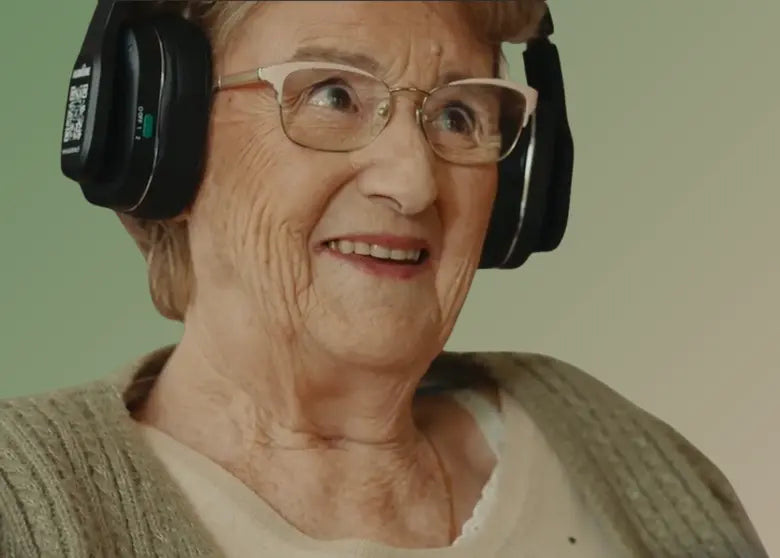
Let's be clear: Spokeo is not designed to treat misophonia. It's a listening assistant with patented dual conduction (air + bone), designed for people with hearing loss. However, one specific feature of Spokeo can benefit people with misophonia in certain situations.
The Smart Mic: isolate the voice, reduce the noise
Spokeo's principle is unique: the speaker wears a directional clip-on microphone that captures their voice at the source and transmits it directly to the headset. Ambient noises — including potential trigger sounds (chewing from neighbouring diners, cutlery sounds, coughing) — are naturally attenuated because the mic only captures the wearer's voice.
In practice, this can help in situations such as:
- Family meals or dining with friends: the conversation arrives clearly in the headset, while chewing sounds around the table are attenuated.
- Work meetings: the Smart Mic on the speaker reduces exposure to distracting noises from other participants.
- Medical consultations: the clinician wears the mic, the patient hears their voice without the clinic's ambient sounds.
Spokeo may help with misophonia if:
- Your main triggers occur during conversations (meals, meetings) rather than in solitude
- You avoid social situations because of mouth or cutlery sounds
- You're looking for a comfort tool to use alongside CBT or ACT therapy
- You also have hearing loss that amplifies stress in noisy environments
Important: Spokeo does not specifically filter misophonia trigger sounds. It reduces ambient noise exposure by isolating the speaker's voice. It's a situational aid, not a treatment. If your misophonia is severe, therapeutic support (CBT, ACT) remains essential.
→ Discover the Spokeo kit: myspokeo.com
7 practical strategies for living better with misophonia
1. Identify your triggers and contexts
Keep a sound diary for 2 weeks: note the sound, context (place, time, fatigue level), reaction intensity (1-10) and what you did. This mapping is the foundation for any therapeutic work — and often reveals surprising patterns (fatigue and stress multiply reactions).
2. Communicate with those around you
Explaining misophonia to your loved ones isn't a sign of weakness — it's a neurological condition. An informed family member can adapt certain behaviours (chewing with mouth closed, avoiding pen clicking) and understands why you sometimes need to leave the room.
3. Always carry a backup tool
Keep selective filtering earplugs or earphones in your pocket. Knowing you can protect yourself at any moment reduces anticipatory anxiety — which is often as hard to manage as the trigger itself.
4. Adjust your work environment
In open-plan offices, a constant background sound (fan, soft music, white noise app) reduces the contrast with trigger sounds. If your employer allows it, negotiate a quiet space or adjusted hours for concentration periods.
5. Avoid total avoidance
Paradoxically, the more you flee trigger situations, the worse misophonia gets. The brain interprets avoidance as confirmation that the sound is dangerous, which reinforces the reaction. Gradual exposure (guided by a therapist) is key to breaking this cycle.
6. Look after your general health
Sleep deprivation, chronic stress and fatigue amplify misophonic reactions. Regular exercise, adequate sleep and a balanced diet don't cure misophonia, but they reduce its daily severity.
7. See a trained professional
Misophonia is better managed when addressed early. Look for a psychologist or psychiatrist trained in CBT, ideally with experience in sensory disorders or audiology.
Frequently asked questions about misophonia treatment
How is misophonia treated?
Misophonia cannot be "cured" in the strict sense, but its symptoms can be significantly reduced. Cognitive behavioural therapy (CBT) is the gold standard treatment, with a 40-60% reduction in reaction intensity for most patients over 8 to 20 sessions. ACT therapy and mindfulness are effective complements. Technological tools (selective earplugs, white noise, ANC headphones) help manage daily life.
Is misophonia a psychological or neurological condition?
Neurological. Neuroimaging studies have shown hyperactivity of the insula (a brain region linked to emotions) in people with misophonia. It's not "in your head" in the psychological sense: the brain reacts differently to certain sounds. However, the most effective treatments are behavioural (CBT, ACT), as they train the brain to respond differently to stimuli.
What is the difference between misophonia and hyperacusis?
Hyperacusis is hypersensitivity to sound volume: all sounds seem too loud. Misophonia is an intense emotional reaction to specific sounds, regardless of their volume. Someone with misophonia may tolerate a 100 dB concert but be overwhelmed by a neighbour's chewing. The two conditions can coexist but require different treatments.
Is there medication for misophonia?
There is no specific medication for misophonia. When the condition is accompanied by severe anxiety or depression, anxiolytics or antidepressants (SSRIs) may be prescribed by a psychiatrist to relieve associated symptoms and facilitate behavioural therapy. But medication alone does not resolve misophonia.
Do earplugs help with misophonia?
Selective filtering earplugs (Loop, Earaser, Calmer) can help by attenuating certain frequencies while letting speech through. They're useful as a daily comfort tool. However, foam plugs that block everything are discouraged long-term: by creating artificial silence, they make the brain even more sensitive to sounds when removed.
Can Spokeo help people with misophonia?
Spokeo is not designed to treat misophonia. It's a listening assistant with patented dual conduction, designed for people with hearing loss. However, its directional Smart Mic isolates the speaker's voice while attenuating ambient noise, which can reduce exposure to trigger sounds in certain social situations (meals, meetings). It's a complementary comfort tool, not a treatment.
Conclusion
Misophonia is not a whim or a lack of tolerance — it's a real neurological condition that profoundly affects quality of life. The good news: solutions exist. CBT delivers concrete, measurable results. Complementary approaches (ACT, mindfulness, sound therapy) enrich the care pathway. And technological tools — selective earplugs, white noise, ANC headphones — help manage daily life while therapy takes effect.
The key is not to face this condition alone. See a trained professional, talk to those around you, and don't hesitate to try the tools that can ease your daily life. Every step towards better management of misophonia is a step towards a more peaceful social life.